Indigenous art and culture in museum settings over the past 100-plus years have typically been interpreted by Anglos—outsiders to the art forms on display.
Art history has silenced Indigenous perspectives, instead speaking for and about Native people, whether those Native people were the makers or the subject of an artwork.
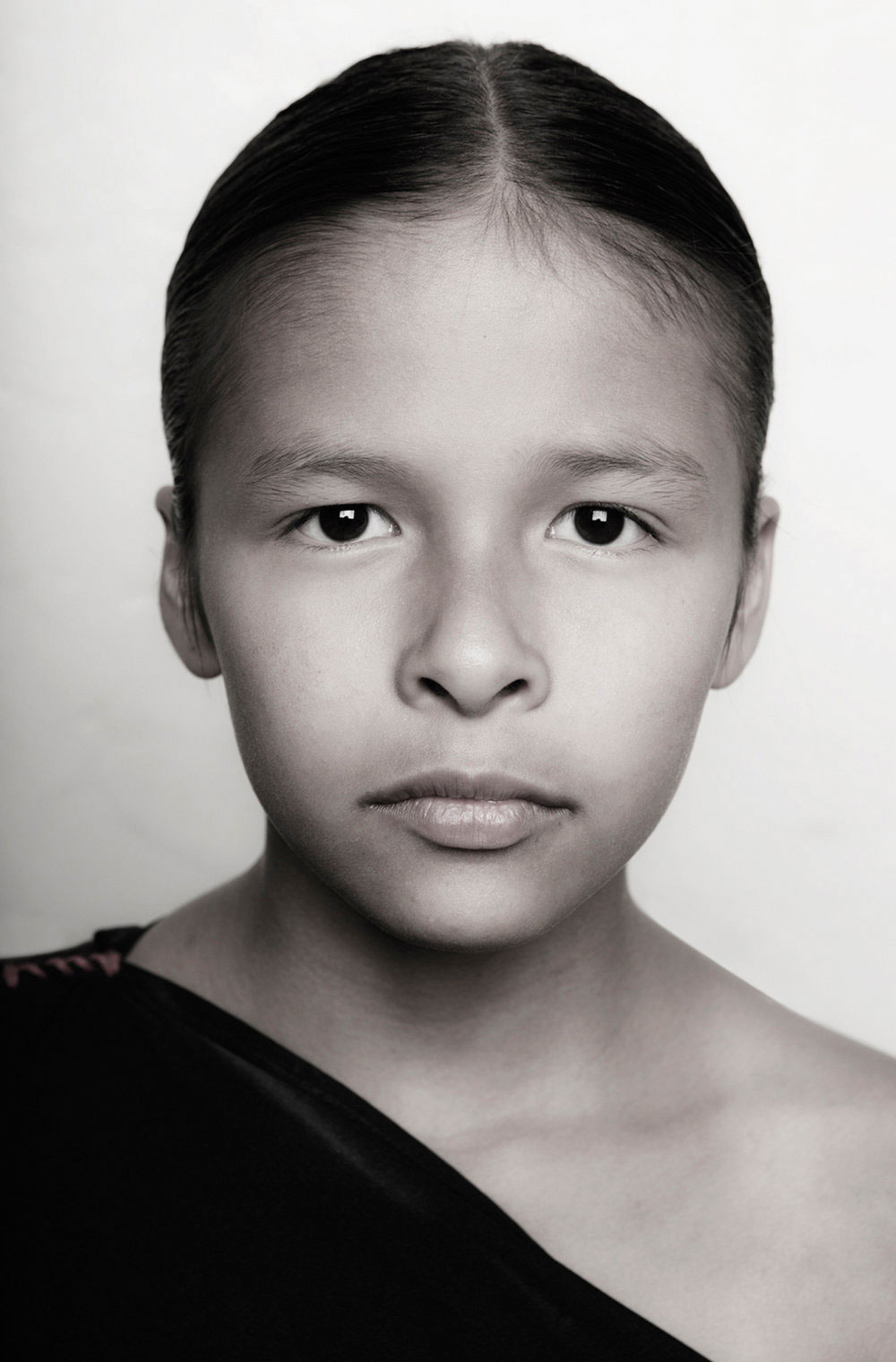 Cara Romero (Chemehuevi), Crickett, 2014, archival inkjet print, 40 x 27"
While Native viewpoints are increasingly being included in museum displays of Indigenous art, what if those perspectives were taken a giant step further and also applied to the Anglo artwork on view, creating a groundbreaking museological role reversal? What would art history look like then?
Colby College Museum of Art in Waterville, Maine, has achieved such a shakeup through its collection reinstallation, Painted: Our Bodies, Hearts, and Village, on view through July 28, 2024. Here, Pueblo perspectives are central not only when considering historic and contemporary Native American art, but also when considering the work of the Taos Society of Artists, the famed group of Anglo-American painters active in Taos, New Mexico from 1915 to 1927. The members of the group often featured Pueblo people in their art.
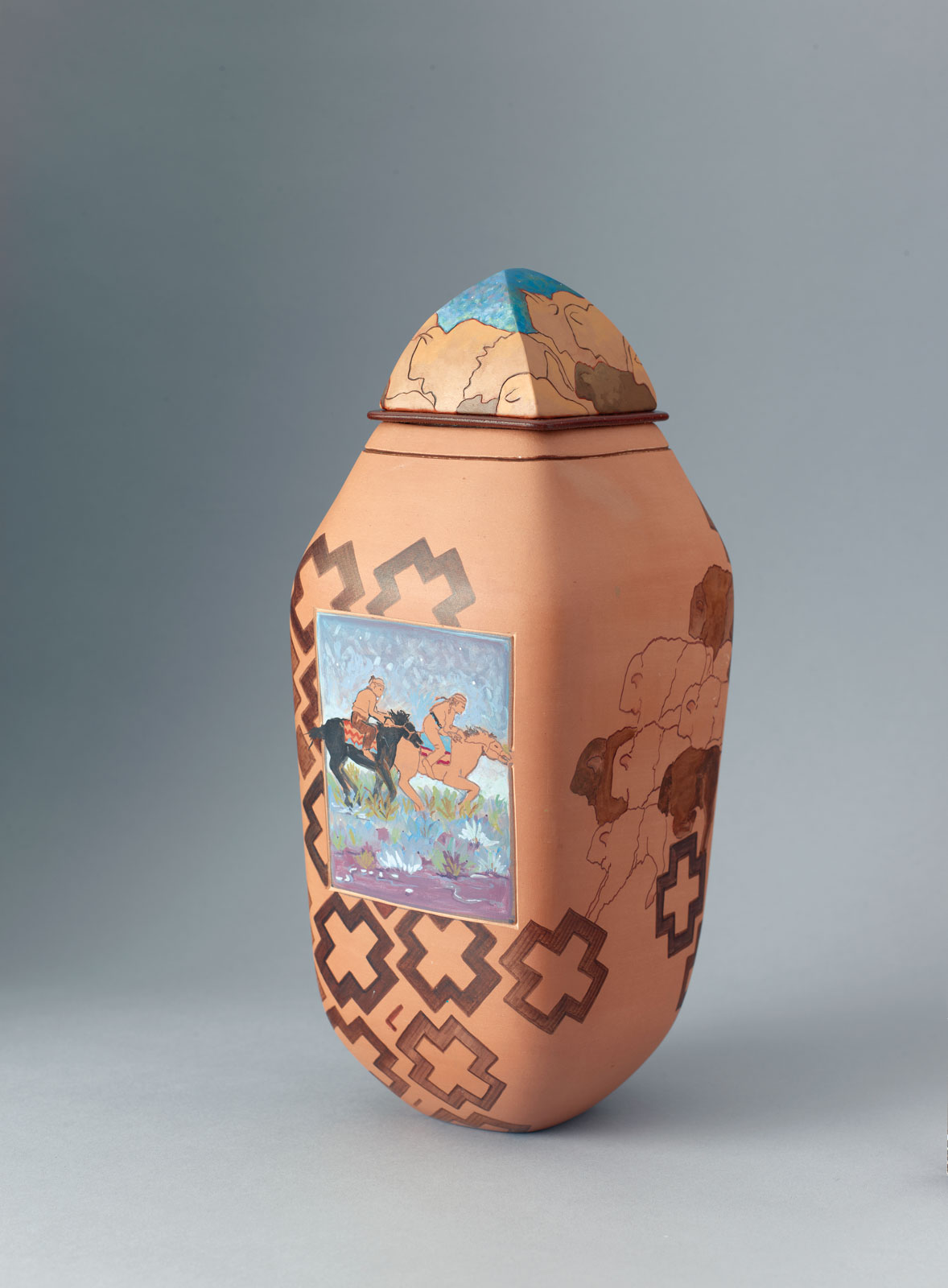 Jody Naranjo Folwell (Santa Clara Pueblo), Ghost Hunters, ca. 2015, redware, 16 x 6½ x 6½”
The exhibition features paintings by TSA artists from Colby’s Lunder Collection—widely recognized as one of the most important collections of American art ever assembled by private hands—in dialogue with works by 20th- and 21st-century Native American artists.
Leading that dialogue are Native voices.
Jody Folwell (Santa Clara Pueblo), Michael Namingha (Ohkay Owingeh and Hopi) and Cara Romero (Chemehuevi) are among the contemporary artists providing firsthand exhibition wall text. A curatorial advisory council made up of Pueblo and Wabanaki artists and stakeholders helped guide the project throughout. Their perspectives are also featured in wall text, along with that of the reinstallation’s co-curators, 2021-22 Lunder Institute research fellows Juan Lucero (Isleta Pueblo) and Jill Ahlberg Yohe.
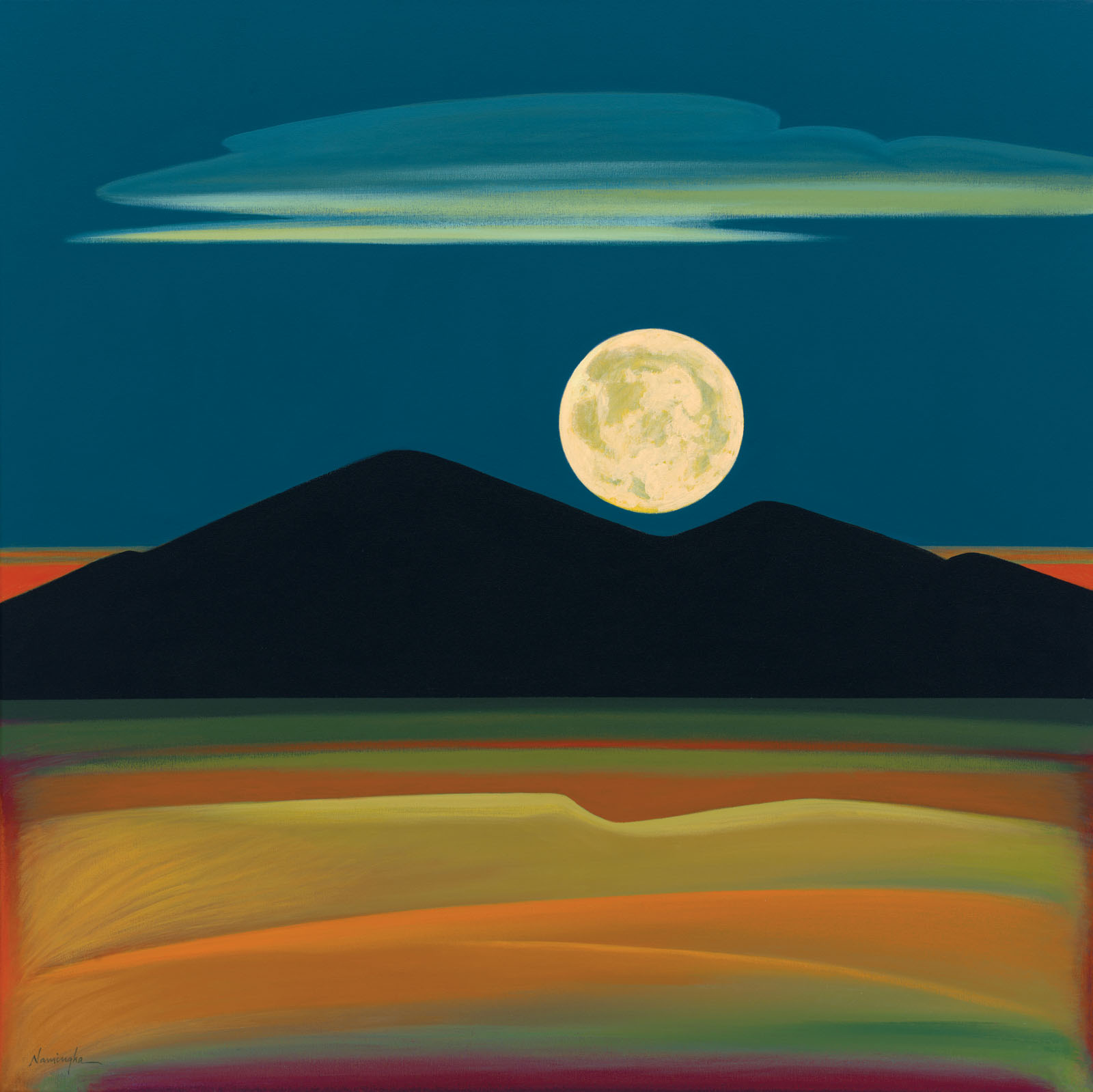 Dan Namingha (Hopi), August Moon, 2022, acrylic on canvas, 33 x 36"
They describe not only the work of Native artists, but the TSA paintings as well.
Together, their insights offer fresh, intimate interpretations of the works. Rich details relating to the meaning and backstories of objects are shared. Centering the Pueblo perspective animates the items in ways outsiders have never been able to.
“The beauty of this exhibition is that it showcases art made in the Southwest in radically new ways and includes extraordinary works of art by legendary figures in American art, both of the past and present, Native and non-Native,” Yohe says. “It also presents this work together, which is very rare, if ever, exhibited at the same time, and the interpretation for the reinstallation is one of multivocality highlighting Pueblo voices over non-Pueblo ones.”
Additionally, Virgil Ortiz (Cochiti Pueblo) served as the project’s exhibition designer, an element both curators credit for greatly elevating the presentation.
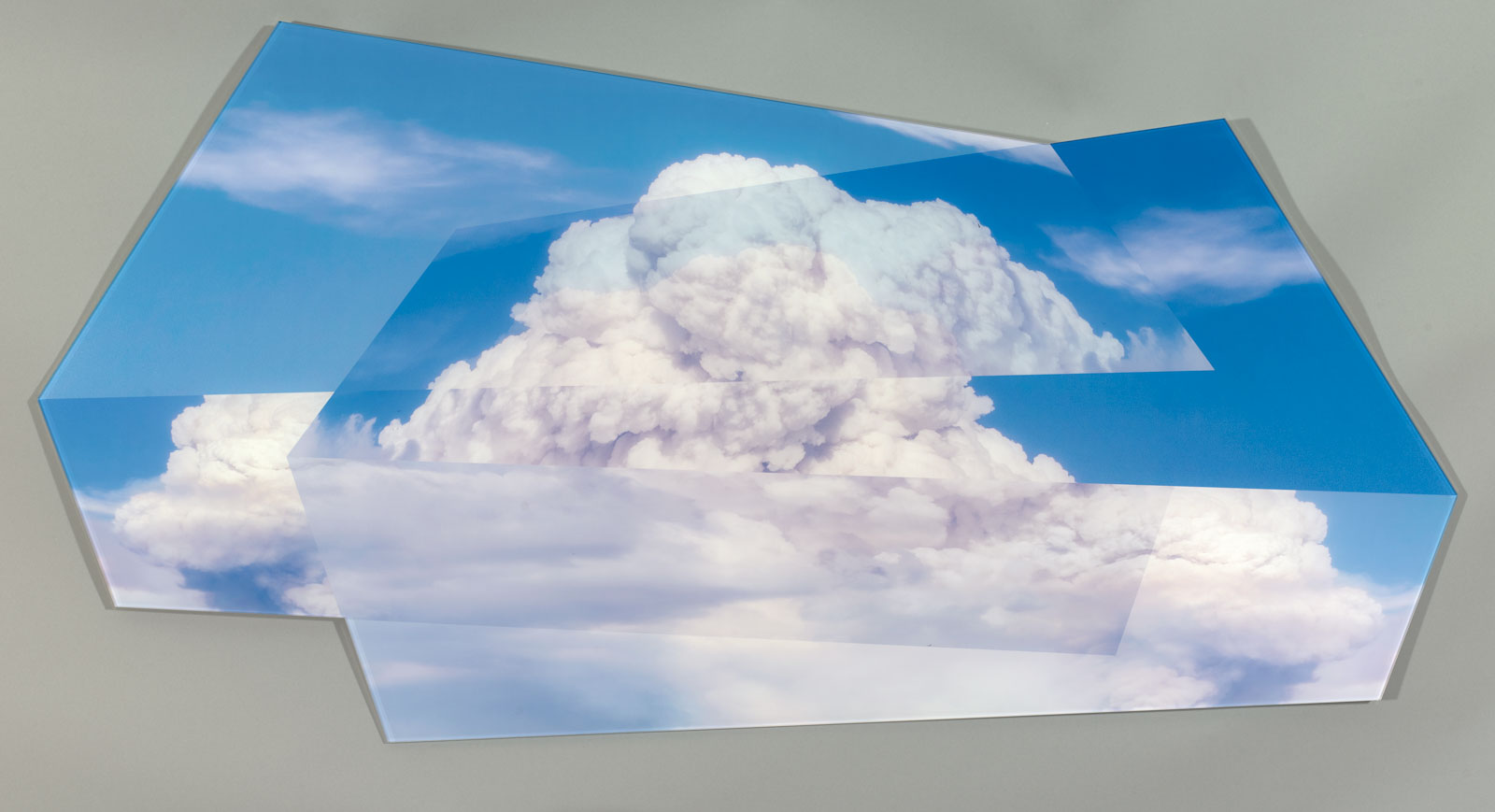 Michael Namingha (Ohkay Owingeh/Hopi), Altered Landscape 15, 2022, chromogenic print on shaped acrylic mount, 25 x 50 x 1"
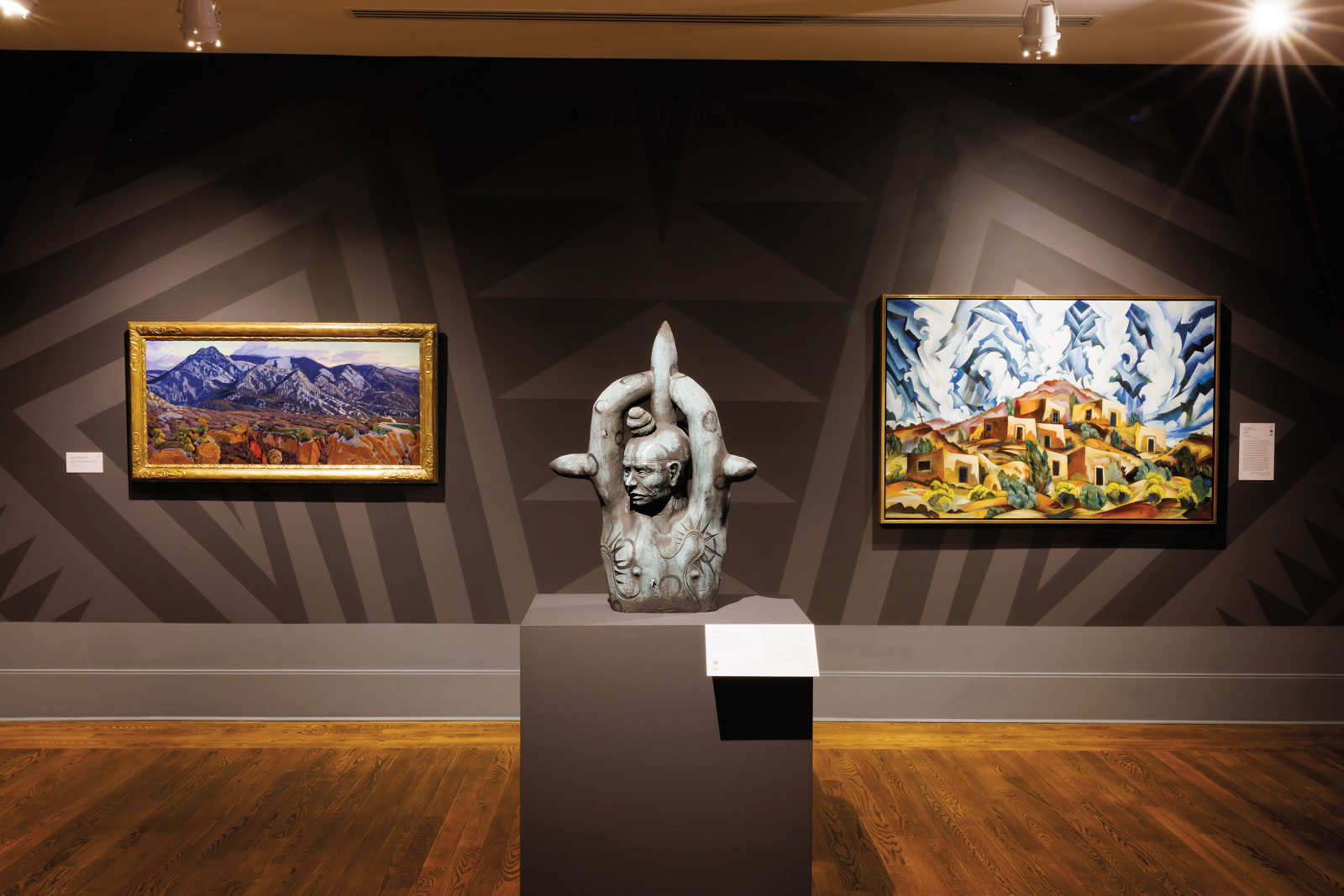 A work by Virgil Ortiz (Cochiti Pueblo) is flanked by paintings from Ernest L. Blumenschein, left, and Tony Abeyta (Navajo (Diné)). Installation view courtesy Colby College Museum of Art. Photo by Stephen Davis Phillips.
“Virgil Ortiz established space by placing welcoming iconography using his ‘Rez Spine’ design that draws viewers into the space,” Lucero explains. “The quality of Virgil’s design has been a powerful tool in utilizing space to establish identity and narrative, giving the impression that the exhibit is housed in a Pueblo pottery vessel.”
All of these considerations come together in creating a museum display of Southwestern art unlike anything experienced previously. “There are no instances to my knowledge in which TSA paintings are situated within a context of an exhibition design by a Pueblo designer. Virgil Ortiz sets the stage for all of the work in the reinstallation to look better and more alive,” Yohe says. “Having Taos Pueblo and other Pueblos and Wabanaki advisors help us to create the exhibition and write interpretation presents this work in an entirely different way. Honestly, TSA paintings have never looked this great.” At Colby College, the Pueblo-centric curation elevates even the work of the Anglo artists, a favor seldom returned over the years when the shoe was on the other foot.
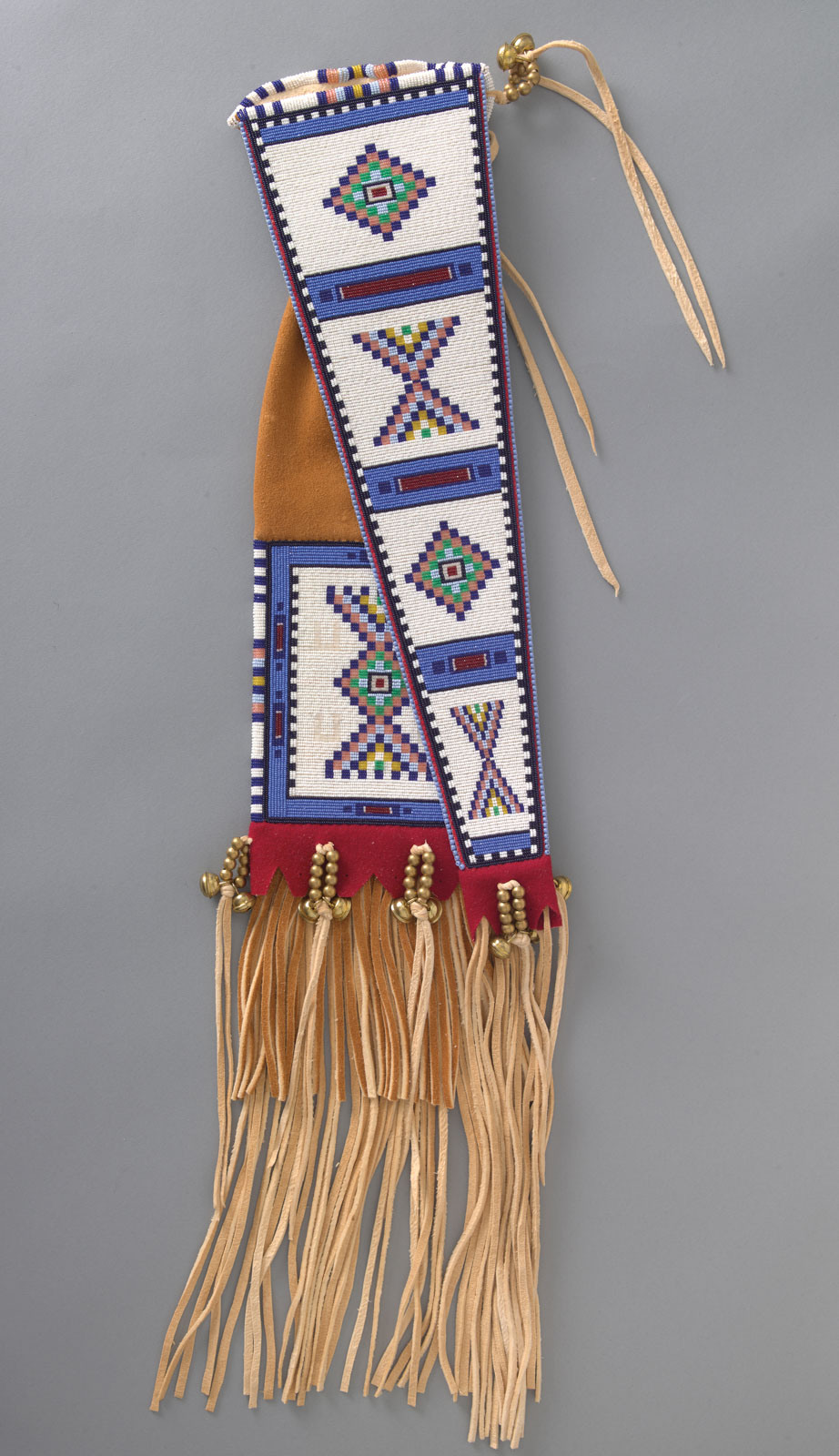 Jessa Rae Growing Thunder (Fort Peck Dakota/Nakoda), Assiniboine (Nakoda) Pipe Bag, 2022, smoked brain-tanned buckskin, antique seed beads, wool, brass bells, brass beads, 27½ x 5½"
“In conversation with Virgil Ortiz, he mentioned that while walking through the exhibit he forgot he was looking at non-Native art,” Lucero recalls. “To me, this is one of the more powerful statements I heard of this exhibit.”
Among the standout pieces are Through the Eyes that Capture Us, a video specially commissioned for this reinstallation featuring commentary from Taos Pueblo community members Gilbert Suazo, Robert Mirabal and Jonathan Warm Day, all of whose grandparents posed for the Taos Society of Artists. They discuss aspects of social, cultural and political life in Taos Pueblo when the TSA was active.
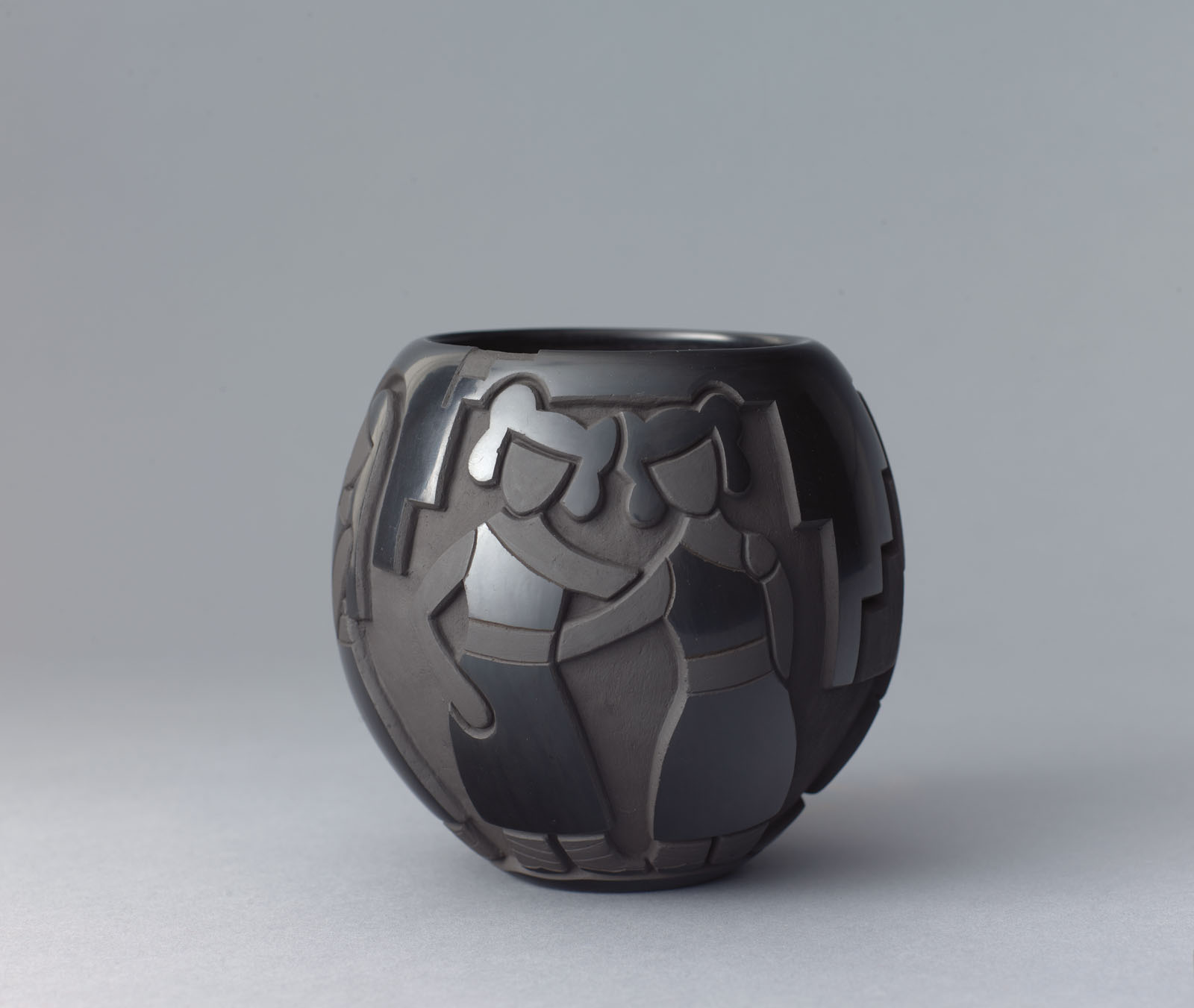 Madeline Naranjo (Santa Clara Pueblo), Human connections, sometimes all we need is a hug, 2022, blackware, 51⁄8 x 4½ x 4½"
Also significant are Juan Pino’s (Tesuque Pueblo, 1896-1950) woodblocks. In the 1920s and 1930s he worked exclusively with woodblock prints and is recognized as the only Native artist to use this medium during this era.
“As a Pueblo person growing up in New Mexico, making museum visits, whether historical or art, I found myself lost in the dialogue that was written by non-Native academics, which were very ethnographic viewpoints,” Lucero says. “To me, this exhibit helps establish Pueblo presence and perspective in the American museum field and demonstrates we have the ability to control and share our own narrative and art. The energy created in the gallery by design and stories shared is immense. This is the same feeling you experience when visiting the Southwest. Alive is the only way I can describe it, and I think that’s most appropriate word for both the Pueblos and the exhibit.”
Through July 28, 2024
Painted: Our Bodies, Hearts, and Village
Colby College Museum of Art,
5600 Mayflower Hill Drive, Waterville, ME 04901 (207) 859-5600, museum.colby.edu
Powered by Froala Editor